


Are We Ready for the Skills Shift? AI, Automation, and the Future of Work
Technological advancement is reshaping not only how we live but also how we work. While Industry 4.0 revolutionized production efficiency, Industry 5.0 introduces something deeper: collaboration between humans and machines, focusing on sustainability, creativity, and social impact.
We’re surrounded by terms like artificial intelligence (AI), machine learning, big data, the Internet of Things (IoT), and robotics. But what do they mean for jobs? While some roles are vanishing, entirely new ones are emerging — with entirely different skill requirements. AI is now part of healthcare, transport, education, and finance. But as it becomes mainstream, public acceptance and understanding are just as critical as innovation itself.
The World Economic Forum predicted in 2020 that 50% of workers will need reskilling by 2025. McKinsey’s report estimates that 400 to 800 million people could lose their jobs due to automation by 2030 — but it’s not all bad news.
This shift doesn’t necessarily mean fewer jobs. It means different jobs, but it seems it has already appeared among the new graduates as well.
Are College Degrees Still a Ticket to Employment? The New Reality of AI and the Job Market
We are witnessing a fundamental shift in how we define work, careers, and even qualifications. As artificial intelligence, automation, and emerging technologies take center stage, one question grows louder: What role will human skills play in the future?
Recent data shows that even top graduates from elite universities are struggling to find jobs. At the same time, companies are increasingly exploring how AI-powered tools can automate tasks previously handled by junior staff.
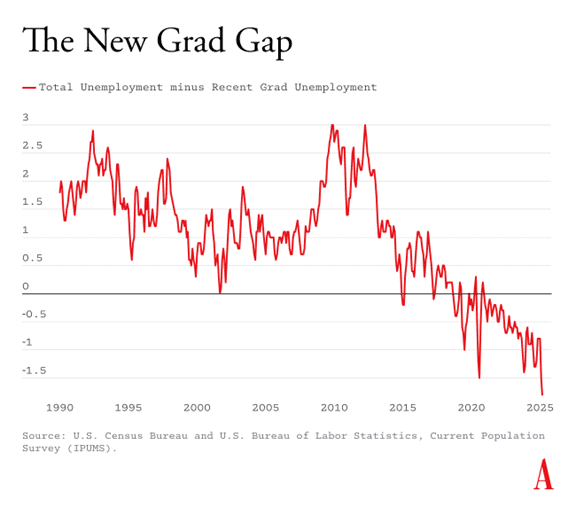
This isn’t just a temporary dip — it could be a long-term restructuring of the entry-level job market. According to Josh Bersin, it can have 3 causes….
1. The Post-COVID Recovery Lag:
Many industries still haven’t recovered their full hiring capacity since the pandemic, especially in white-collar sectors like IT and consulting.
2. The Devaluation of Degrees:
Having a degree doesn’t guarantee job security anymore — skills, adaptability, and digital fluency often outweigh diplomas.
3. The Rise of Generative AI:
Entry-level tasks — research, reporting, summarizing — are increasingly performed by AI tools like ChatGPT. This could reduce the need for junior hires.
As a Business Analyst and Consultant, I see these challenges/questions daily at corporations.
– How do we adapt our workforce strategy?
– Can we optimize hiring while integrating automation?
– How do we reskill internal teams instead of replacing them?
The answer lies not in panic, but in data-informed strategy, process redesign, and continuous learning.
While some fear AI as a threat, I see it as a strategic trigger for change — but only if we lead that change with intention. The tools are evolving fast. It’s up to us to ensure people evolve with them.
